METHODOLOGY

Evidence into direction.

A collaborative six-step process that reveals your true attack surface, explains what it means to the business, and turns the findings into a practical path forward.

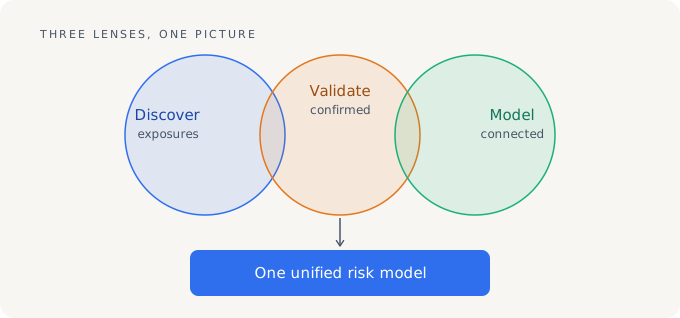
ONE PICTURE. THREE LENSES.

Technical facts become useful when they are placed in context.

Our methodology brings technical evidence, operational reality, and executive decision-making together. The result is not another stack of disconnected findings. It is a shared understanding of where the organization stands and what should happen next.

What’s really there

Evidence from your systems and controls

What it means for your business

Context from the people who know it best

What to do first

A clear order of action

Discover, validate, and model overlap to resolve into one unified risk picture.

THE ASSESSMENT JOURNEY

What happens at every stage.

Discover

Establish the business and technical context that makes the assessment relevant.

We begin with focused interviews across IT, security, leadership, and key business functions. Together, we document critical services, sensitive data, business dependencies, known concerns, third parties, cloud environments, and the realities of how your organization operates.

How we collaborate
Leadership and stakeholder interviews, existing documentation, asset context, known constraints.
What you receive
A shared scope, stakeholder map, and initial picture of what matters most.

Assess

Gather evidence across the systems, controls, and pathways that shape exposure.

Our team works alongside your technical staff to collect and interpret evidence—not simply run tools and hand over raw output. Testing is coordinated to minimize disruption while examining externally visible assets, internal exposure, identity and access, configurations, vulnerabilities, and control effectiveness.

How we collaborate
Authorized access, coordinated testing windows, local technical knowledge, and evidence sources.
What you receive
A consolidated body of technical evidence tied to the environment in which it exists.

Validate

Separate meaningful exposure from noise, duplication, and misleading scanner output.

Findings are reviewed collaboratively with the people who know the environment. We confirm affected assets, compensating controls, business ownership, exploitability, and operational relevance so that recommendations reflect reality—not assumptions made from a distance.

How we collaborate
Working sessions with system owners and technical teams to confirm evidence and context.
What you receive
A defensible set of validated findings with false positives and ambiguity reduced.

Prioritize

Connect technical findings to business impact and the paths an attacker could actually use.

We evaluate severity alongside exposure, known exploitation, asset importance, lateral movement potential, data sensitivity, and business consequence. Related findings are grouped into practical remediation themes so teams can address root causes rather than chase an endless list of individual alerts.

How we collaborate
Risk tolerance, operational dependencies, change constraints, and remediation capacity.
What you receive
A sequenced roadmap focused on material risk, achievable action, and measurable progress.

Present

Give every audience the level of clarity they need to make decisions.

Technical teams receive evidence and remediation guidance they can use. Executives receive a concise view of posture, material risk, and investment priorities. Leadership discussions are grounded in one consistent picture, without forcing decision-makers to interpret tool-specific jargon.

How we collaborate
Technical readout, executive briefing, and direct discussion of questions and tradeoffs.
What you receive
An executive risk brief, technical assessment report, attack surface model, and leadership-ready presentation.

Improve

Turn the assessment into a durable improvement cycle—not a point-in-time document.

We remain available to help teams interpret findings, sequence work, evaluate compensating controls, and communicate progress. Follow-up assessments and trend reporting can show what was resolved, what persists, what is new, and whether risk is moving in the right direction.

How we collaborate
Remediation check-ins, advisory support, evidence updates, and reassessment when appropriate.
What you receive
Clear ownership, visible progress, and an evolving understanding of security posture.

HOW WE WORK

Rigorous without becoming disruptive.

Collaborative by design

Your team’s knowledge is treated as evidence. We work with local experts to understand systems, constraints, and compensating controls.

Evidence before opinion

Conclusions are traceable to observed data, validated context, and clearly stated assumptions.

Business impact in view

Technical severity is never the entire story. We consider the services, data, people, and operations behind each exposure.

Actionable at every level

Outputs are designed for both the people doing the work and the leaders deciding what to support, fund, or accept.

DESIGNED AROUND YOUR REALITY

A right-sized engagement.

You do not need a fully staffed cybersecurity department to get meaningful value from the assessment.

We adapt the working model to your internal capabilities. Where security resources are limited, we can help organize evidence, facilitate technical conversations, and guide remediation planning. Where mature teams are in place, we add independent perspective, cross-functional context, and leadership-ready communication.

What we ask from your team

Access to the right stakeholders, timely context about the environment, coordinated approval for assessment activities, and candid discussion of business constraints. We keep requests focused and make the purpose of each activity clear.

What you can expect from us

A transparent process, respectful collaboration, careful handling of information, direct communication, and findings explained in language appropriate to the audience.

START THE CONVERSATION

Know Where
You Stand.

A Security Posture Review is a focused executive conversation about your organization’s current concerns, priorities, and decision needs.

We will clarify what prompted the conversation, identify the questions that matter most, and determine whether a Postura Assessment is the appropriate next step.

Schedule Your Security Posture Review